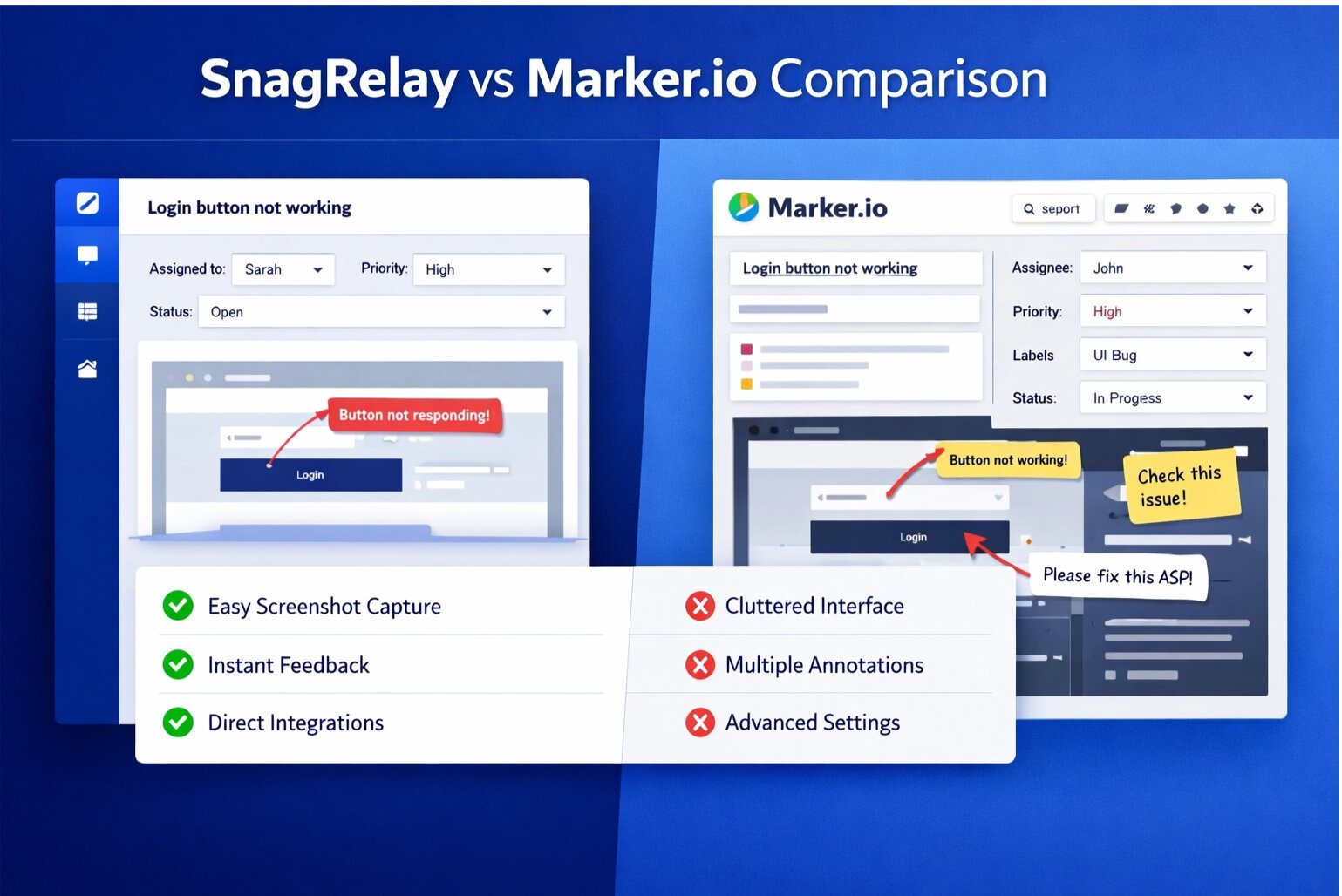

Bug reports are the lifeline of software development. A great bug report can be fixed in minutes. A poor one wastes hours of developer time. Yet most bug reports are incomplete, vague, and missing critical context. This guide teaches you how to write bug reports that developers actually want to fix.
The Problem: Why Most Bug Reports Fail
Developers receive hundreds of bug reports every week. Most are useless. Here's why:
- Vague descriptions: "The app is broken" tells developers nothing
- Missing context: No browser version, device type, or network conditions
- No reproduction steps: Developers spend hours trying to recreate the issue
- No screenshots or videos: Developers can't see what the user saw
- No error messages: Critical information is left out
The result? Developers waste 30+ minutes asking follow-up questions for every bug report. Your team moves slower. Bugs take longer to fix. Everyone is frustrated.
The Anatomy of a Great Bug Report
A great bug report includes five essential elements:
1. Clear Title
Start with a specific, actionable title that describes the problem, not the solution.
- Bad: "App crashes"
- Good: "Payment page crashes when entering non-US zip code"
2. Detailed Description
Explain what happened, what you expected to happen, and why it matters. Use 2–3 sentences maximum.
- Example: "When I try to complete a payment with a Canadian postal code (e.g., K1A 0B1), the payment page crashes with a 500 error. I expected the form to accept non-US zip codes. This prevents Canadian users from purchasing."
3. Reproduction Steps
Provide a numbered list of exactly how to reproduce the issue. Be specific.
- Go to snagrelay.com/pricing
- Click "Start Free Trial"
- Fill in email and password
- Enter Canadian postal code in billing address
- Click "Complete Purchase"
- Observe: Page crashes with 500 error
4. Environment Information
Include browser, OS, device, and any other relevant context.
- Browser: Chrome 120.0.6099.129
- OS: macOS 14.2
- Device: MacBook Pro 16-inch
- Network: Home WiFi (stable connection)
5. Visual Evidence
Include screenshots, videos, or console logs. A picture is worth a thousand words.
- Screenshot of the error message
- Video of the crash (60 seconds max)
- Console error logs
- Network request details
The Modern Approach: Automated Context Capture
Writing great bug reports takes time. Modern tools like SnagRelay automate the hard parts. Instead of manually gathering screenshots, console logs, and network data, SnagRelay captures everything automatically:
- Session replay: Watch exactly what the user did before reporting the bug
- Console logs: Automatic capture of JavaScript errors and warnings
- Network requests: See which API calls failed and why
- Browser metadata: Automatic capture of browser, OS, and device information
With SnagRelay, users can report bugs in 30 seconds. Developers get everything they need in one click. No follow-up questions. No wasted time.
Best Practices for Bug Reporting
- Be specific: "Login fails" vs. "Login fails when using Google OAuth on Safari"
- Include reproduction steps: Numbered, detailed, step-by-step
- Provide context: Browser, OS, device, network conditions
- Add visual evidence: Screenshots or videos
- Include error messages: Console logs, stack traces, error codes
- Explain the impact: Why this bug matters
- One bug per report: Don't mix multiple issues
Conclusion
Great bug reports are the foundation of fast development. By including clear descriptions, reproduction steps, environment information, and visual evidence, you help developers fix bugs faster. Tools like SnagRelay make this even easier by automating context capture. Your team moves faster. Bugs get fixed sooner. Everyone wins.
Ready to improve your bug reporting process? Try SnagRelay free for 14 days. Automatic session replay, console logs, and network capture. No credit card required.